On the acceleration of the expansion of the Universe.
S.T. Dobbs
Recently there has been much fascinating discussion concerning apparent changes in physical laws or universal parameters over the age of the Universe. Most notably this has included a relatively recent and unexpected acceleration of the expansion of the Universe, which has generally been attributed to the occurrence of a previously unknown force which acts on matter, and changes in the speed of light detected in changes of spectroscopic properties of stars which manifest themselves as changes in the fine structure constant.
It seems to me that one possible explanation that unifies these two phenomena has so far been overlooked, and would like to propose it as a hypothesis. This involves the relative “stickiness” of free space to the motion of matter (known as inertia) or to charged or magnetically polarized bodies (which lead to the permittivity and permeability of free space). Inertia is thought to be due to the gravitational influence of the mass of all matter in the Universe on each single body. The equivalent “electrical inertia” which determines that light has a finite velocity is presumably, by analogy with inertial mass, the influence of electrical charge distributed throughout the universe on a single body which feels the electromagnetic interaction..
Gravitational and electrical inertia are both functions of the distribution of the entirety of matter within the Universe. Any massive change in the distribution of matter will have had an influence on both. As matter began to condense out into stars and galaxies, the average distance of most of the matter in the Universe from any single body will have increased. Gravitational and electrical influences decrease with increasing distance according to the famous inverse square law. We could therefore expect the inertial mass of an object to decrease as matter condensed in the Universe., so that the expansion of the Universe would accelerate. Similarly, the “electrical inertia” described in the fine structure constant would have decreased, and the velocity of light therefore increased.

The Naked Ape Revisited
or
The implications of dietary habit on the development of Homo Sapiens as a species
S.T. Dobbs
In the history of mankind, ever since it split from those ancestors which it has in common with other primates, there occurred a change which remains a mystery and is, to date, unsolved, the very nakedness of the naked ape. At some stage in man’s prehistoric development, he lost the great majority of the protective coat of fur which is present in virtually all mammalian species. Those other species which have lost their body visible body hair have done so for reasons of streamlining or because of the other demands of an exacting environment, for example the naked mole rats of the Sahara desert, which hardly need the thermal protection provided by an insulating layer of fur in the heat of the desert sand, a layer which would become an encumbrance because of its burrowing habit, or the aquatic mammals such as whales and dolphins which need to move through oceans with the minimum of drag. Here the loss of hair was offset by the development of an insulating layer of fatty tissue under the skin (the adipose tissue). Why did mankind lose much of its body hair, even to the point that this necessitated the adoption of artificial layers of skin made from other natural materials, often the skin of other mammals with their original layer of protective hair? There is even a possibility that the resourcefulness which was needed to overcome this lack of insulation in cold climates caused an uncommonly rapid development of innovation and intelligence, which led to the development of clothing, housing, and even central heating systems. My hypothesis is that such a loss of bodyhair is a direct consequence of Man’s habit for cooking his food, a habit which has important subsiduary evolutionary implications, which have rendered such a change in physiology economically (in energetic terms) viable.
This article really concerns the emergence of humankind as a radically more successful species than its contemporary early hominids. Rôles have been mooted for many disparate factors in the evolution of the human species, including some salient ones which have become central to the success of mankind: a large brain, the lack of significant amounts of body hair, an erect habit of locomotion, and the relatively small energetic requirement of the body organs in total, other than that of the brain, which is able to offset the large energy demands of the brain itself in its evidently energy demanding activities. Many evolutionists regard the energy economy of the human body to be of singular importance in the development of the human species, and I agree with this wholeheartedly. I do, however, think that to date an important, if perhaps unfashionable point has been overlooked, namely the importance of the cooking of food on the development of our species. It has been stated that the energy demand of the human gut is much less than that of close relatives, a fact which was attributed to the higher quality of the human diet than that of those relatives. How, it may be asked is the diet of higher quality than other species? Agriculture, and the availability of reliable sources of such quality food is a much more recent phenomenon, but I have long held the view that the cooking of food, essentially the predigesting of food before eating, renders it less energy demanding in its digestion, so that the digestive system needs to work less hard in breaking it down ( that is, less energy is needed to be expended in its digestion)- this is the reason why the human body has the same overall energy requirement as the close apes, despite the high energy demand of the human brain. Of course, such a predilection for partially digested food (in that hydrolysis, the breaking down by water, is effectively what digestion is, and is a process which is mimicked effectively by cooking food) is entirely consistent with the concept of evolution by arrested development (in that their are significant advantages to individuals who bear the characteristics of younger members of the species who are less than fully developed, having greater inquisitiveness and adaptability, for instance, and that it is often the case that offspring are weaned onto predigested food, that is, food that as already been broken down to a certain extent by the stomach of one of the parent and regurgitated)
The predigestion of food before consumption, yielding a significantly greater energy yield per kilogram of food ingested, thus enabling the support of a much more functional and effective brain may not, however, be the only important physiological and evolutionary implication in the consumption of cooked food. I may be stating the obvious, but such inherently self-evident points can easily be missed, cooked food is hot. No other species on earth indulges in such a luxury, and yet the cooking of food is of such an advantage to human survival that the practice is universal in every society on Earth. Nowhere do we find a culture which depends exclusively, or even to any significant degree, on uncooked food. The reasons are clear, the energetic implications have already been noted, but additional to this is the elimination of pathogenic microorganisms which cause disease such as food poisoning, or other more serious conditions (although food poisoning itself can be fatal in the type of harsh environment in which primitive man had to survive.)
There are, however, much more serious implications in the consumption of hot food. A decently hot meal could, without effective thermoregulation, increase the blood temperature by up to 0.5ºC . The ingestion of hot particles of food poses quite a physiological difficulty for the body, since it involves a significant source of heat very close to the body’s core, close to important organs which require a constant temperature for their function. It is more than probable that an animal possessing any greater than a token degree of insulation close to the surface of the body would suffer severe heat stress which would be virtually intolerable. The rapid dissipation of heat from the body is a necessary corollary to the consumption of sizeable hot meal, and one of the most efficacious ways of ensuring such a rapid loss would be to minimise the coverage of hair over most of the body surface.
In support of this hypothesis, it must be pointed out that most animals with fur, which of course do not undertake the cooking of their food (since man is the only animal to carry out such a practice), are not able to dissipate excess body heat by perspiration. This is the deliberate loss of heat energy by the secretion of a saline solution onto the skin, which evaporates and hence takes any heat energy with it. Fur, an insulating layer on top of the skin, would certainly impede such a mechanism. It seems plausible that animals with fur seldom have the need for such drastic heat dissipation processes, not having evolved mechanisms for such a massive loss of body heat. Why? Because they never ingest food which will compromise the body temperature in the way that humans do. No other animal on Earth ingests food which has been cooked.
It may therefore be postulated that the ingestion of food which is of a significantly higher temperature than the body is advantageous to the animal, even though this poses a physiological difficulty on the organism, and so there is a selection pressure to develop methods of dissipating the excess heat which is so taken on board by the organism. For a mammal, the most obvious method of temperature reduction would be the loss of body hair. The head is, however, exposed to the highest level of ultra violet radiation from the Sun, an thus might require protection from this by retaining hair.
It should also be noted that treatment of hypothermia, where core body organs have become dangerously cold, is often effected by the injection of hot liquids. This is a clear indication of the way in which the injection of hot or cold food can have significant physiological effect.
Alternative explanations for the hairlessness of the human animal have long been expounded. Perhaps the most widely accepted current hypotheses is that hairlessness is somehow selected for sexually because the female of the species prefers hairless males. Why this has led to males which are more hirsute than females remains to be explained. Other ideas have included a prehistoric aquatic habitat for our ancestors, but we are lacking any other adaptations in anatomy or physiology which might give weight to such assertions.
Potential difference.
S.T. Dobbs
It seems to me that the word potential is now used ubiquitously as a synonym of the word possible. It even seems to be regarded as a more sophisticated usage than the word possible, and so is preferred. However, potential does not mean the same thing as possible. When something is possible, there is the chance that it may happen in the future, or may have happened in the past. On the other hand, potential is the property of being able to happen in the future. There can be no potential that something that has already happened could happen, because it has either happened or it hasn’t, whether we know about it or not.
To illustrate this I would like to employ a couple of radio announcements. In the first scenario…
“Sherlock Holmes is looking for more possible victims”, we can reasonably deduce that Holmes is a detective using his skills to seek out victims of a crime that has already happened..
In the second scenario,
“Jack was searching for more potential victims”, we can reliably conclude that Jack is a murderer. It would be a shame to lose this distinction between the two words.
My second gripe about the word potential is when it is used tautologically. For instance, a risk is the potential for something bad happening. So in the phrase potential risk, the word potential is redundant. A risk is a real risk, but that means there is potential for something bad happening. Similarly the word threat means the potential for harm, so doesn’t need to be qualified by the word potential. Indeed, in my second radio announcement we could even dispense with the word potential and say…
“Jack was searching for more victims” and still convey the same meaning.
A load of hot air.
I have often corrected students who use the phrase “heat rises” , telling them that it is hot air that rises.. I have now had second thoughts about this. Hot air, being less dense than cold air, does of course rise, and cold air, being more dense, sinks. But that means that as the hot air rises, it is replaced by cold air sinking below it. Hence the net movement of air is zero, and it really is just heat energy which is rising overall.
Waste not, want not.
I would like to offer my take on fossil fuels . Burning them is a mistake. The argument about increasing carbon dioxide in the atmosphere is fatuous, since the fossil fuels are a sequestration of carbon dioxide from the atmosphere. Previously carbon dioxide in the atmosphere was much higher than it is now. The Earth was warmer, due to global warming. Tropical forests and warm seas were prevalent. The rate of photosynthesis was maximal, thus sequestering huge amounts of carbon dioxide. The remnants of this period are fossil fuels and carbonate rocks ( see the massive sequestration of atmospheric carbon dioxide in the form of coal, oil, limestone chalk and other carbonate rocks. Look at the white cliffs of Dover and contemplate that they are carbon dioxide removed from the earth’s atmosphere). Because huge amounts of carbon dioxide were locked away, the Earth is now cooler, always on the edge of an ice age. Under current conditions, the natural reserves of organic substances that we call ‘fossil fuels’ are precious to humanity. They give us a myriad of materials that are essential to modern life, from polymers to pharmaceuticals. It is a shame to burn them. But it is not about global warming.
Rubisco: the controller of atmospheric carbon dioxide
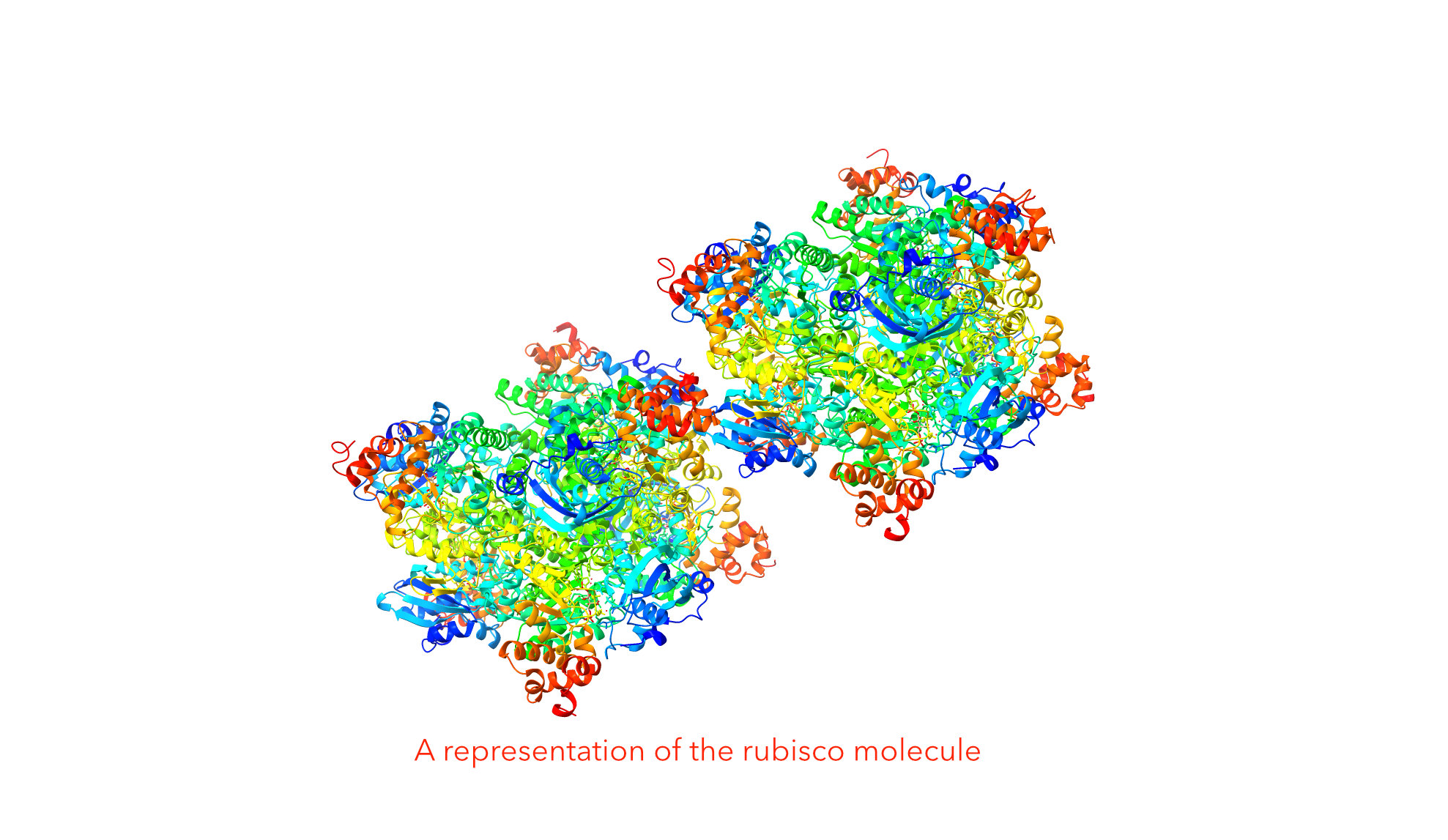
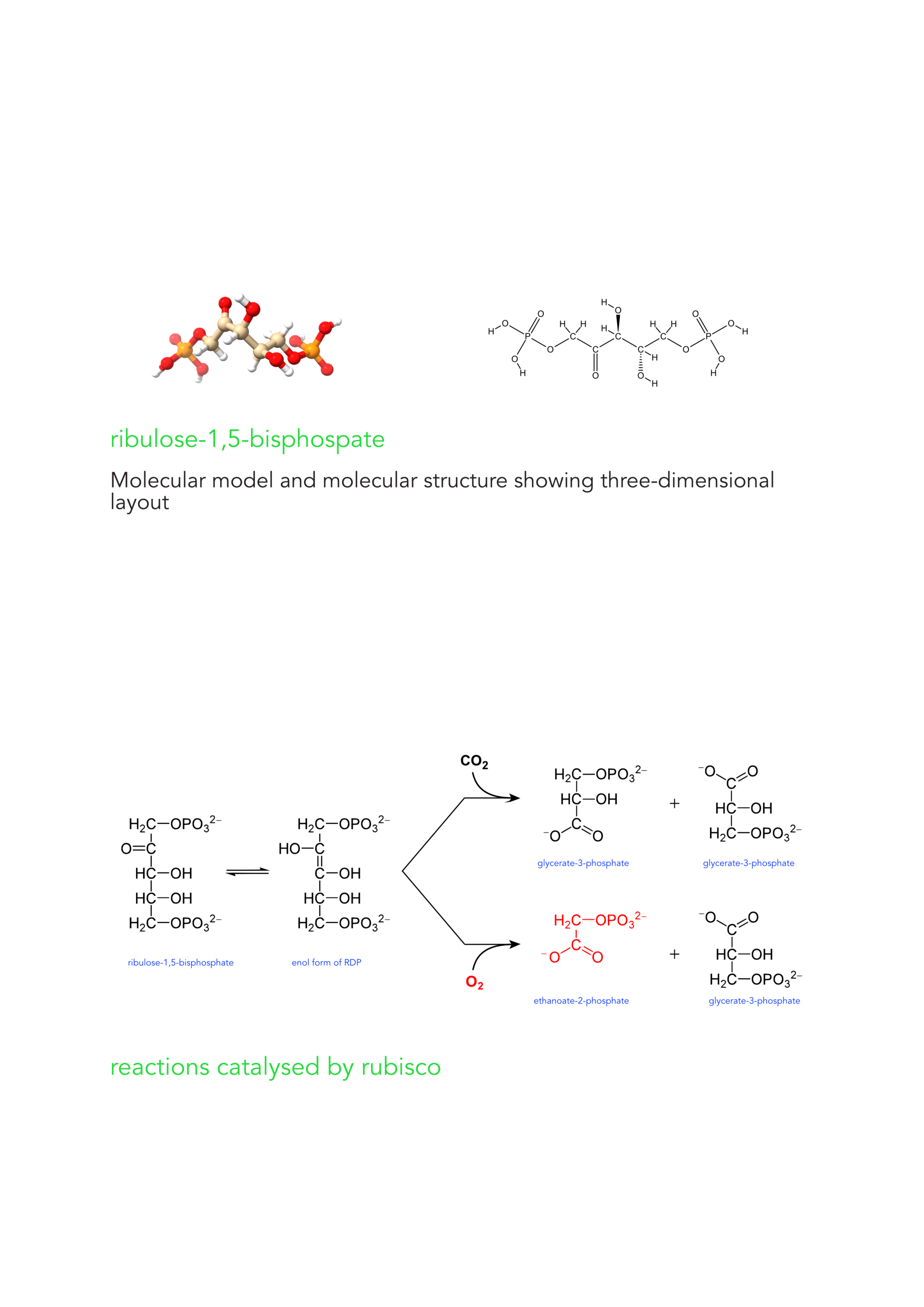
Around four billion years ago, when the Earth’s atmosphere was devoid of oxygen and only primitive, esoteric forms of life populated the planet, there emerged a protein, a chemical catalyst or enzyme, that was set to transform the Earth and its atmosphere completely. It generated all of the oxygen present in the atmosphere (which now comprises about 20% of the total gases). This led to the evolution of the animal kingdom of living things, and consequently the generation of the protective ozone layer, but also reduced the levels of carbon dioxide to the vanishingly low levels (0.04%) that we have today. This meant a drastic cooling of the Earth (carbon dioxide is well known to be a greenhouse gas, causing the warming of the Earth, the degree of warming being dependent on the amount of carbon dioxide present in the atmosphere) , so that it has, since that time, teetered continuously on the edge of ice ages, falling into becoming an icy wasteland and then climbing out of such ages with a fair degree of regularity. The protein is named as ribulose-1,5-bisphosphate carboxylase/oxygenase, or rubisco for short, is now the most abundant protein on Earth, a fact that highlights its importance. What is its function? It catalyses the chemical reaction between carbon dioxide and a sugar called ribulose-1,5-bisphospate, which is the primary chemical reaction by which inorganic carbon, in the form of carbon dioxide, enters the biosphere. That is, it controls the sequestration of carbon dioxide from the atmosphere to form sugars which can then provide energy for the processes of life.
In the reaction catalysed by rubisco, the enzyme facilitates the attack of the C2 carbon of ribulose-1,5-bisphosphate, which enables the subsequent cleavage of the chemical bond between the C2 and C3 carbon atoms of the sugar to give two molecules of glycerate-3-phosphate. Glycerate-3-phosphate is then involved in a cycle of reactions called the Calvin cycle that results in the net production of glucose. The sequence of reactions from carbon dioxide to glucose are known as the dark reactions of photosynthesis, because they can proceed independently of light. However the overall process is driven by a series of reactions which require light as a source of energy, unsurprisingly named the light reactions.
One peculiarity of rubisco as an enzyme has, is that it is relatively slow in its operation. It only goes through a few of its cycles per second, whereas other enzymes have turnover numbers of several thousand per second. The reason for this is that it has very weak affinity for carbon dioxide, that is it does not grip the carbon dioxide molecule very tightly. This is an evolutionary trick to prevent a competing reaction involving oxygen featuring significantly, because it has an even weaker affinity for molecules of oxygen. The side reaction would reduce the efficiency of rubisco reacting with carbon dioxide if it were to be more prevalent.
A consequence of this low turnover number is that an increase in carbon dioxide concentration will increase the speed that rubisco operates, thus increasing the rate of photosynthesis. Another way of stating this is that the enzyme is far from saturated with carbon dioxide, so carbon dioxide is the limiting factor of photosynthesis. Increasing the level of carbon dioxide increases the rate of photosynthesis, thus increasing the rate of sequestration of the gas from the atmosphere. Commercial growers of tomatoes make use of this effect by pumping carbon dioxide into glasshouses, markedly increasing the yield of tomatoes. In the distant past, when carbon the dioxide level was up to 5 000 times its present level, photosynthesis would be approaching its maximum rate, accounting for the very dense tropical rainforests that covered the Earth. It was this rapid sequestration of carbon dioxide that reduced this greenhouse gas to the vanishingly small concentration we see today, with the additional consequence that the Earth is now much colder than it was.
A letter to The Times.
(unpublished)
There has been much discussion in your letters and comments sections concerning the coronavirus, vaccines to it, and conspiracy theories which have surrounded both. Some of the comment has focussed on the ‘central dogma of molecular biology’ which was coined by Francis Crick in 1958. This related to the transfer of information from the genetic code in the form of DNA which is transcribed into a messenger molecule of RNA, and thence the RNA code is translated into protein structure. Many have used this dogma to assert that information coded for in an organisms genetic compliment, its genome, such as in a viral RNA genome cannot possibly find its way into the host cell’s DNA genome to cause a mutation.
However, this is not the case. It has been shown that some RNA viruses, notably the retroviruses such as HIV, use an enzyme, reverse transcriptase to convert the viral genome, which is in the form of RNA, into double stranded DNA, which then is stitched into the host genomic DNA by an enzyme called integrase. This integrated virus is known as a provirus. The provirus then becomes part of the host genome.
Similarly, in the cells of complex organisms there are many ‘jumping genes’, transposons or transposable elements, that behave very much like retroviruses. They are able to duplicate themselves and move to different parts of the genome. One class of transposons transcribe themselves into mRNA which is then reconverted into DNA by cellular reverse transcriptase, and this DNA in stitched back into the genome at a different location by an integrase. It is possible that these transposons are the relics of old retrovirus infections.
These, and other mechanisms that occur in bacteria (via restriction enzymes) have enabled us to alter the genome of organisms by genetic engineering: for example the production of human insulin by yeast cells.
It is becoming apparent that the central dogma of molecular biology is only partially true. Viruses and bacteria mediate a constant flux of genetic information around the ‘genomosphere', causing widespread mutations and changes in characteristics. It is quite possible that such a flux mediates abrupt changes in evolution without intermediate stages, known as punctuated evolution.
So it would seem that, although we should take most conspiracy theories with a pinch of salt, it is worth bearing in mind that there may be a tiny grain of truth in them.
It is, in my opinion, possible that the injection of large quantities of mRNA that codes for the spike protein into the bloodstream could lead to the integration of the gene for the protein into chromosomal DNA. This might lead to the expression of the spike protein in huge amounts which then could find its way into the bloodstream. Such large quantities of this protein would certainly increase the viscosity of the blood hugely, which could account for the excess deaths due to pulmonary disease that we are now witnessing.
Vicious fist-fight at St Lowes School.
At ten years old, I had a fight. It was not my first fight, either literal or metaphorical. Nor would it be the last. I don't know quite what brought its memory to me today, but it was a real physical fight that I don’t think I provoked. At junior school, I had a group of friends. I have always been a friendly guy.
I guess that I would describe myself as empathetic. I think that sometimes my friends saw this lack of edge as weakness. In some ways I enjoy gentle teasing, even to this day, but people can become accustomed to this and use it to feel better about themselves, by escalating gentle teasing to full blown name-calling and bullying.
My ears were ringing that day with their taunts of “Boneo”- heaven knows where that name came from. Even from Shaza, the girl in the group. Others were ring leaders, and always would be, people who turned out to be enemies of mine, but at that time I saw them as friends. Matthew, on the other hand, was a kind, intellectual sort, whom I admired. But things went wrong with Matthew that day. In my annoyance, at lunchtime, I ended up sitting on Matthew on the playing field, at the top of the hill. The bell went for afternoon school, so I got up. So did Matthew, but he had a look of violent retribution on his face, his bare fists raised. He set upon me like an old fashioned bare-knuckle fighter. I dodged his punches, and tried not to lay any myself, but in the end I had to defend myself. So I actually hit Matthew. As he had hit me. But my blow to his chin was very effective, and stopped him in his tracks. I am unsure about what happened next, but we ended up going down to class.
Next day Matthew came to school armed with a giant bruise on his chin and a letter from his mother to the Headmaster.
I was summoned to Mr Thompson’s office. The letter was read to me. “A totally unprovoked, vicious attack on my son with bare fists, causing possible permanent disfigurement”.
The punishment was explained. A day of ritual humiliation standing silently in a corridor where everybody passed. For what I saw as self defence.
That doesn’t matter. What does matter is that Matthew and I actually made up and remained good friends until we left school.