Simon Dobbs
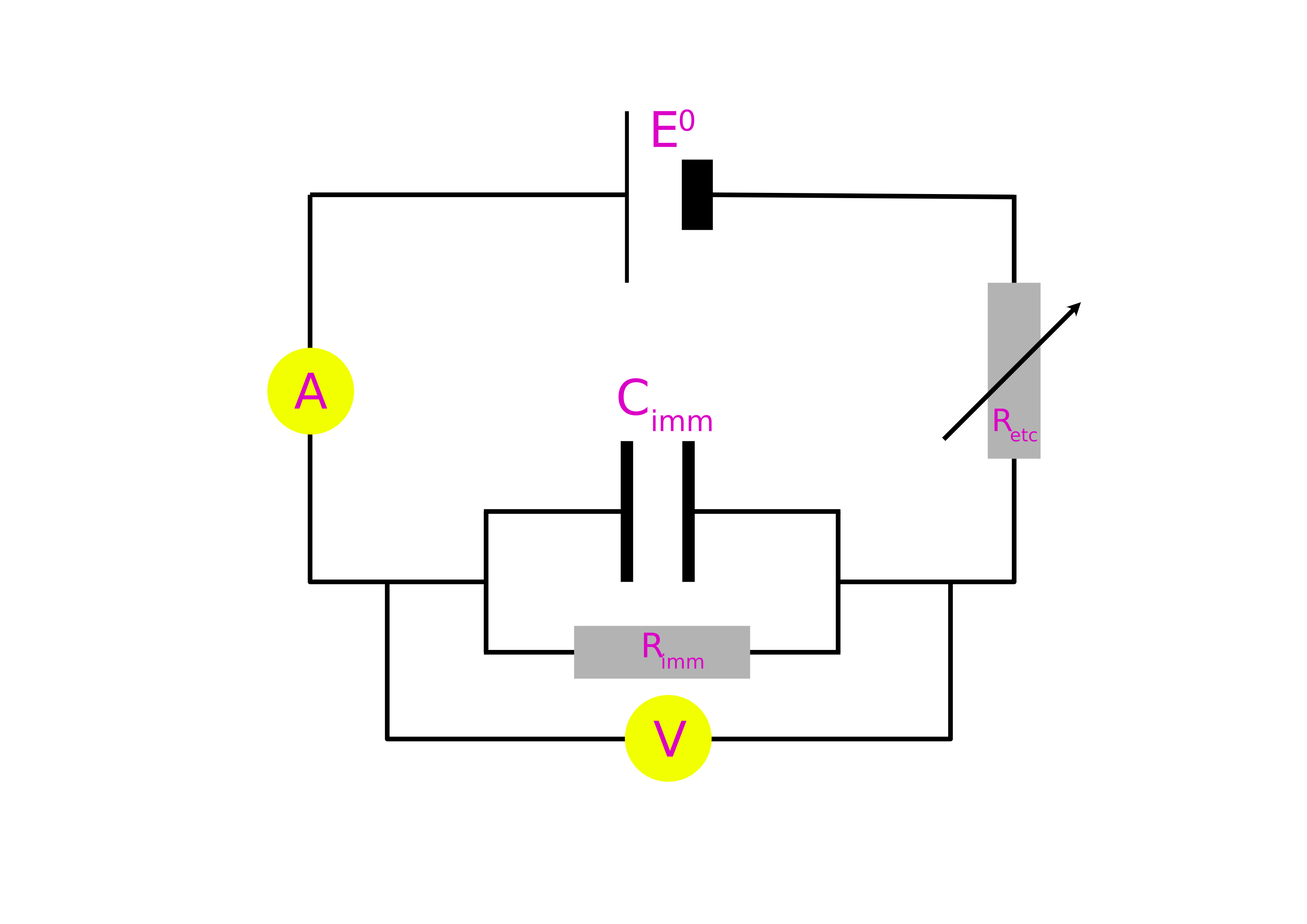
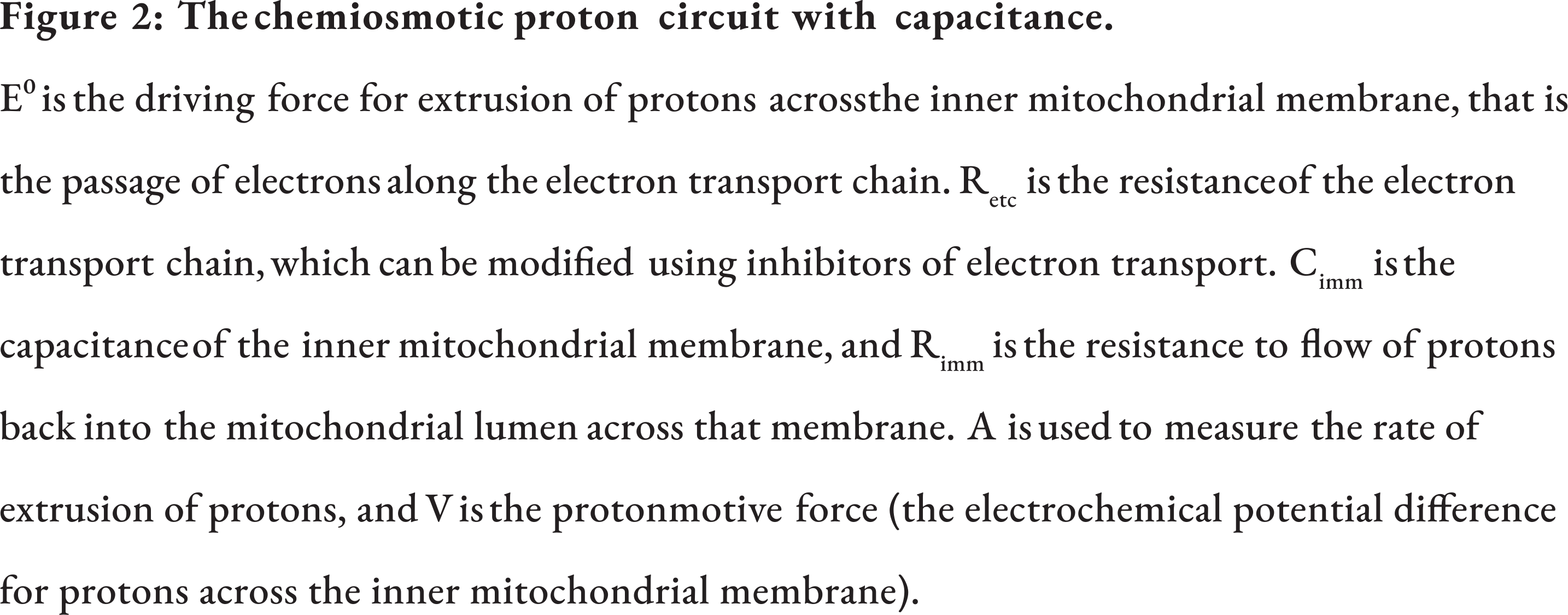
The Chemiosmotic protonic circuit is a conceptual device that aids a theoretical examination of Peter Mitchell’ s Chemiosmotic Theory of free energy transduction in mitochondria, bacteria, and chloroplasts. This theory proposes that the movement of protons across an energy-transducing membrane, such as the mitochondrial inner membrane, yields an electrochemical potential difference for protons across the membrane which can then be used by an ATP synthetase enzyme to drive the synthesis of ATP from ADP and inorganic phosphate. The protonic circuit draws an analogy between this flux of protons and the movement of electrons in a simple electrical circuit. This provides a rigorous model for the control of electron flux along the respiratory chain, which effectively provides the source of energy for protonic flux as the battery does for electrical flux in the electrical circuit. The extrusion of protons by the respiratory chain, and their return via the ATP synthetase complex correspond to the electrical conductors, and resistances. Current through the protonic circuit is equivalent to electronic conduction, and can be measured in Amperes (where 1A is 1 Coulomb of charge per second, there being 96500 Coulomb per mole of electrons or , in the case of the protonic circuit, protons), and the electrochemical potential difference of protons is analogous to the potential difference across the resistive components of the electrical circuit. The notion that respiratory activity, that is movement of electrons along the electron transport chain is linked to the extrusion of protons across the inner mitochondrial membrane, thus leading to the build up of a charge gradient across the membrane leads to the concept of respiratory control. The build up of the charge gradient inhibits the further extrusion of protons and so limits the electron transport activity. Any dissipation of the charge gradient relaxes this inhibition so that electron transport increases.
Although the Chemiosmotic protonic circuit has generally been accepted as a model for the control of activity in energy transducing organelles and bacteria, widely quoted in published work on respiratory control in mitochondria, and in textbooks concerning the Chemiosmotic Theory, there has no been application of this model in published work which explores this concept in a rigorous way. This paper aims to fill this gap, exploring the consequences of the protonic circuit on the regulation of electron flux in mitochondria.
The protonic circuit consists of several components, the protonmotive energy source, namely the oxidation of respiratory substrates by the electron transport chain, the conductive (or resistive) components involved in the movement of protons across the inner mitochondrial membrane- the pathways by which protons are extruded by the electron transport protein complexes, and the pathways for their movement back into the mitochondrion such as the ATP synthetase complex. Each of these components has its own internal resistance which contributes to the overall resistance of the circuit. The one important component which is always omitted from the circuit is the capacitance of the inner mitochondrial membrane, that is, its capacity to store charge. As protons are extruded across the inner membrane, they accumulate with the corresponding build up of charge. This charge storage must be in parallel with any influx pathway, since protons can be extruded and reimported into the mitochondrion on a one-to-one-basis. This concept gives an intuitive, although not experimentally verified, solution to the most compelling criticism of the simple protonic circuit as a model for the control of respiratory electron flux, namely that reductions in the flux of electrons through the circuit are not necessarily reflected immediately in a reduction of the charge stored in the capacitance, a store of charge, which is the inner mitochondrial membrane.